
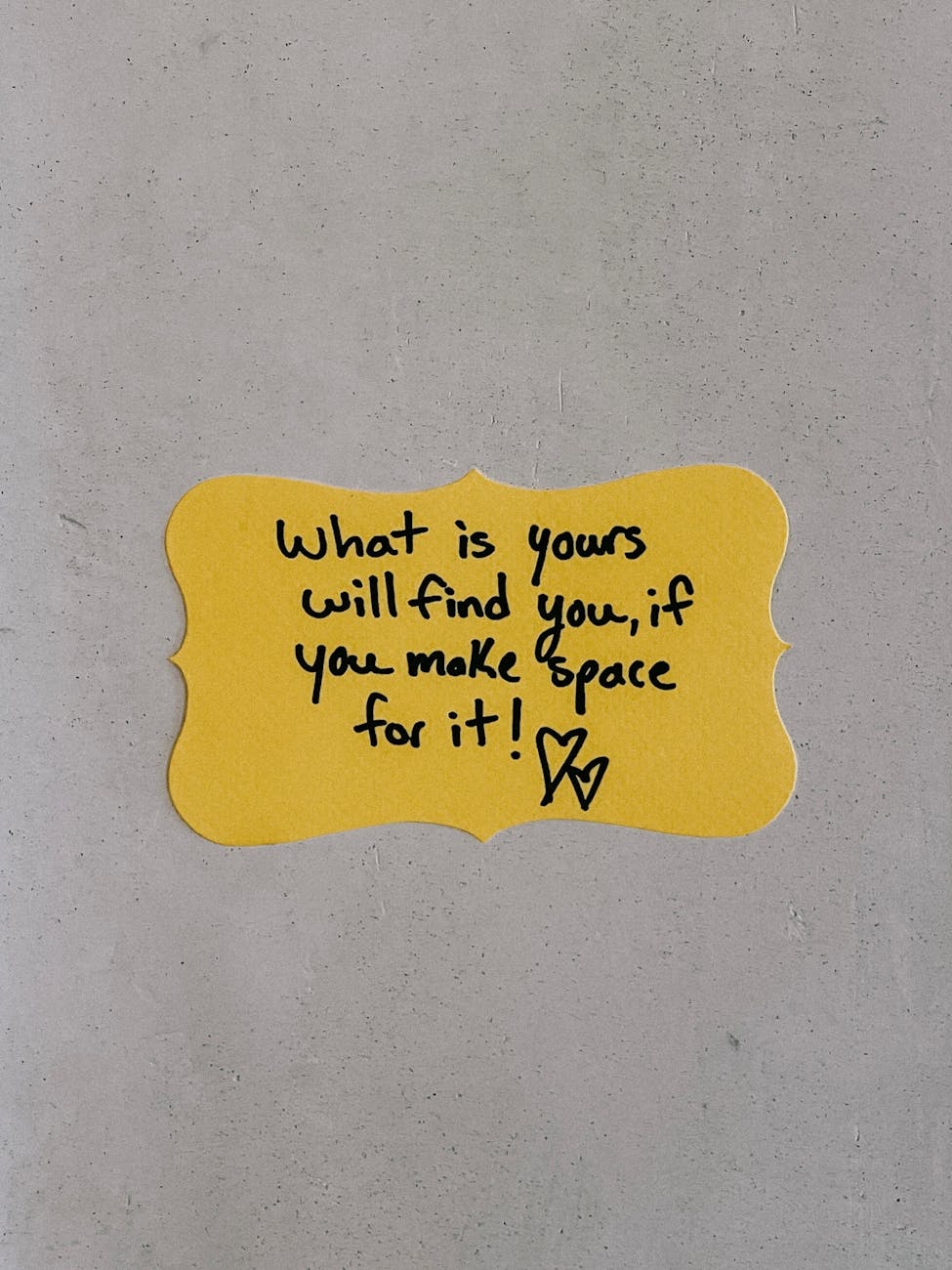
“Vulnerability is the last thing I want you to see in me, but the first thing I look for in you.” — Brené Brown
We’ve all heard the phrases:
- “Everything happens for a reason.”
- “Just stay positive.”
- “Look on the bright side.”
- “It is what it is.”
- “It is well.”
Most of the time, people mean well. They want to encourage us, calm us down, or help us move on quickly. But sometimes, these responses don’t comfort us at all. Instead, they make us feel unseen, dismissed, or even guilty for struggling in the first place.
This is called toxic positivity.
Toxic positivity is the pressure to appear positive no matter how painful, disappointing, or difficult a situation may be. It replaces empathy with platitudes and often silences honest emotion.
Real positivity doesn’t deny pain. Real positivity acknowledges reality and still chooses hope.
What toxic positivity looks like
Toxic positivity often sounds encouraging on the surface, but underneath it avoids discomfort.
In the workplace
You’re overwhelmed and exhausted, but you hear:
- “At least you still have a job.”
- “Just push through.”
- “Don’t be negative.”
A project fails, but instead of learning from it, everyone rushes to say:
- “Everything’s fine.”
- “Let’s just move on.”
The result? People stop speaking honestly.
In relationships and family life
Someone opens up about grief, disappointment, or anxiety and hears:
- “Don’t cry.”
- “Be grateful.”
- “Others have it worse.”
Instead of feeling supported, they feel emotionally shut down.
Why toxic positivity happens
Most people are not trying to be cruel. Often, toxic positivity comes from discomfort.
We struggle to sit with pain, our own and other people’s. So instead of listening, we try to fix emotions quickly with catchphrases.
Sometimes positivity becomes:
- a way to avoid difficult conversations,
- a mask for fear,
- or a shortcut to escape emotional discomfort.
But ignored emotions don’t disappear, they go underground.
Eventually they return as:
- burnout,
- resentment,
- anxiety,
- passive aggression,
- emotional distance,
- or sudden outbursts.
The hidden cost of toxic positivity
1. It destroys trust
People stop being honest when they feel their emotions are unwelcome.
In workplaces, teams begin hiding problems. In relationships, people begin hiding themselves.
2. It prevents growth
If nobody can admit:
- “This failed”
- “I’m struggling”
- or “I need help”
then real solutions never happen, because growth requires honesty.
3. It creates emotional isolation
One of the most damaging feelings in life is believing:
“I have to suffer silently because my emotions are inconvenient.”
Toxic positivity turns real conversations into performances.
The difference between healthy optimism and toxic positivity
Healthy optimism says:
“This is hard, but we will get through it.”
Toxic positivity says:
“Stop being negative.”
Healthy optimism acknowledges reality first, while toxic positivity skips reality and jumps straight to a motivational slogan.
One builds resilience. The other suppresses emotion.
How to respond better
The goal is not to become negative, the goal is to become emotionally honest.
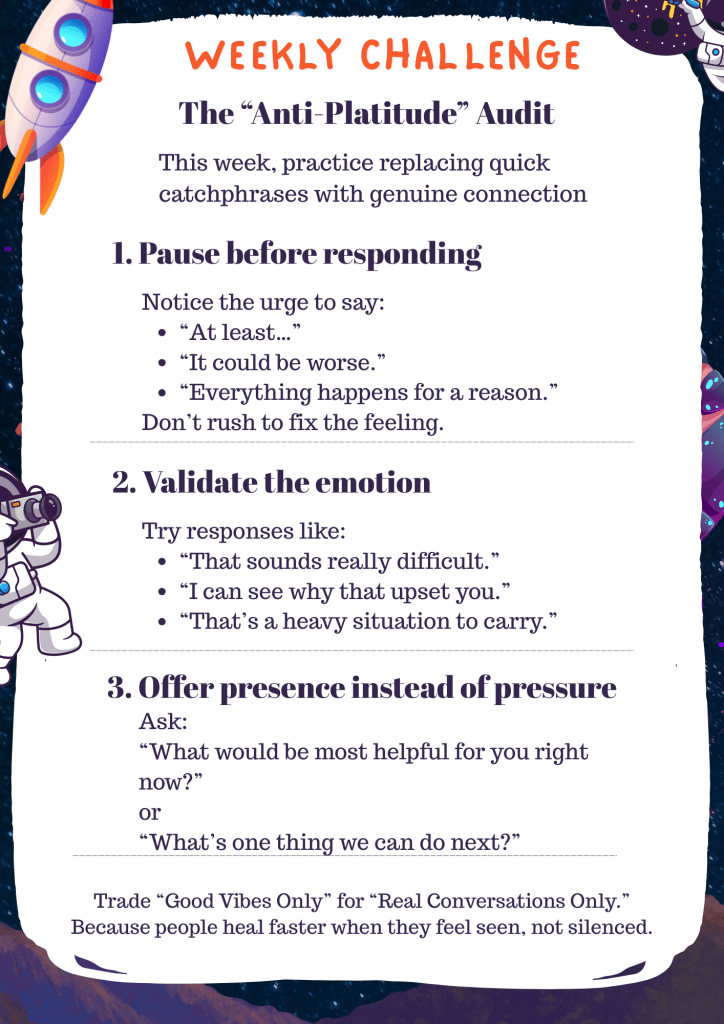
1. Practice validation before solutions
People usually don’t need immediate advice, they need to feel heard first.
Instead of:
“Don’t worry, it’ll all work out.”
Try:
“That sounds really difficult. I can understand why you feel that way.”
Validation doesn’t mean you agree with everything someone feels. It means you acknowledge their experience is real.
2. Replace fixing with listening
Sometimes the most powerful thing you can say is:
“I’m here.”
Not every problem needs an instant solution. Presence is often more healing than perfect words.
3. Create emotionally safe spaces
In workplaces, families, friendships, and communities, people thrive when they can speak honestly without fear of shame.
Leaders especially must learn this.
A healthy leader can say:
- “This project didn’t go well.”
- “I don’t have all the answers yet.”
- “This season has been difficult.”
That honesty creates trust, not weakness.
4. Focus on agency, not denial
Acknowledging pain does not mean staying stuck in it.
Once emotions are acknowledged, ask:
“Given this situation, what is one thing we can control right now?”
This shifts people from helplessness toward purposeful action.
Toxic positivity in relationships
Toxic positivity quietly damages intimacy.
When people feel they must always appear “fine,” relationships become shallow and performative.
Instead of emotional connection, everyone starts managing appearances.
Over time:
- vulnerability disappears,
- difficult conversations are avoided,
- and resentment grows beneath the surface.
Real connection is built when people feel safe enough to be honest.
Practical language shifts
Small language changes make a huge difference.
| Instead of this… | Try this… |
| “Look on the bright side.” | “That sounds painful.” |
| “Everything happens for a reason.” | “I’m sorry you’re going through this.” |
| “Don’t be upset.” | “Your feelings make sense.” |
| “Just stay positive.” | “What support do you need right now?” |
| “Others have it worse.” | “This matters, and I’m listening.” |
A scriptural perspective
Scripture never teaches us to pretend pain doesn’t exist.
The Bible is filled with honest emotion:
- grief,
- frustration,
- fear,
- lament,
- disappointment,
- and crying out to God.
The shortest verse in Scripture says:
“Jesus wept.” — John 11:35
Even knowing resurrection was coming, Jesus still entered into human sorrow.
That matters deeply.
Faith is not emotional denial, it is trusting God while facing reality honestly.
Romans 12:15 reminds us:
“Rejoice with those who rejoice; mourn with those who mourn.”
Notice the balance:
- celebrate joy,
- but also make space for grief.
Biblical resilience is not pretending everything is okay, it is carrying hope and honesty together.
Toxic positivity says:
“Your pain is uncomfortable, so hide it.”
Healthy encouragement says:
“Your pain is real, and you don’t have to carry it alone.”
Whether at work, at home, in leadership, or in faith, people don’t need perfection. They need authenticity.
A fake smile may protect appearances temporarily, but honest conversations build trust that lasts.
Real resilience is not denying the storm, it is learning how to walk through it truthfully, together.
Stop trying to “positive-vibe” your way through challenges, start building the emotional strength to face reality with honesty, empathy, wisdom, and hope.
“Optimism is not about being blind to reality. It’s about believing you can improve it.” — Simon Sinek





 Uplifting Renewal
Leave a comment