

“We cannot become what we need to be by remaining what we are.” — Max De Pree
We’ve reached the final part of this series and this is where everything comes together.
So far, we’ve named the patterns. We’ve exposed the lies. Now, we focus on what it actually looks like to move differently.
If you missed the earlier posts in the series, you can catch up on Imposter syndrome: The silent thief of success and How to move from self-doubt to self-trust.
Because overcoming imposter syndrome isn’t about eliminating doubt forever. It’s about learning how to respond when it shows up.
Let’s unpack five final patterns, the ones most amplified by comparison, pressure, and visibility, and how to shift out of them with intention.
1. The comparer
“Everyone else is ahead of me.”
The trap
You measure your real life against someone else’s highlight reel.
You overlook your progress because it doesn’t look like theirs.
This leads to:
- Constant self-doubt
- Feeling “behind” even when you’re growing
- Dismissing your own wins
The shift
Track your progress, not theirs.
Your growth is personal not performative.
Practical reset:
- Start a weekly “progress log” (What did I improve? What did I learn?)
- Replace comparison with curiosity: What can I learn, not copy from them?
- Ask: Am I better than I was 3 months ago?
You are not behind. You are on a different path.
2. The superperson
“I have to do everything and do it well.”
The trap
You tie your worth to productivity, so rest feels like failure. Slowing down feels uncomfortable.
But constant output without alignment leads to burnout, not success.
The shift
Choose impact over activity.
You are not a machine, you are a steward of your energy.
Practical reset:
- Identify your top 3 priorities daily (not 15 tasks)
- Schedule rest like it’s a responsibility, not a reward
- Ask: What actually moved the needle today?
Doing more isn’t the goal. Doing what matters is.
3. The mentor imposter
“Who am I to guide someone else?”
The trap
You believe you need to be perfect before you can help others.
So you:
- Hold back your voice
- Downplay your experience
- Wait until you feel “ready”
The shift
Your journey is your credibility.
People don’t need perfection, they need perspective.
Practical reset:
- Share one lesson you’ve learned this week (even if it’s messy)
- Reframe: I’m not the expert to i’m a step ahead
- Focus on being helpful, not flawless
Your honesty will help more than your polish ever could.
4. The lucky One
“I just got lucky.”
The trap
You attribute success to timing, not ability.
So you:
- Dismiss your effort
- Fear being “found out”
- Struggle to own your achievements
The shift
Document your evidence.
Success leaves patterns. Start noticing them.
Practical reset:
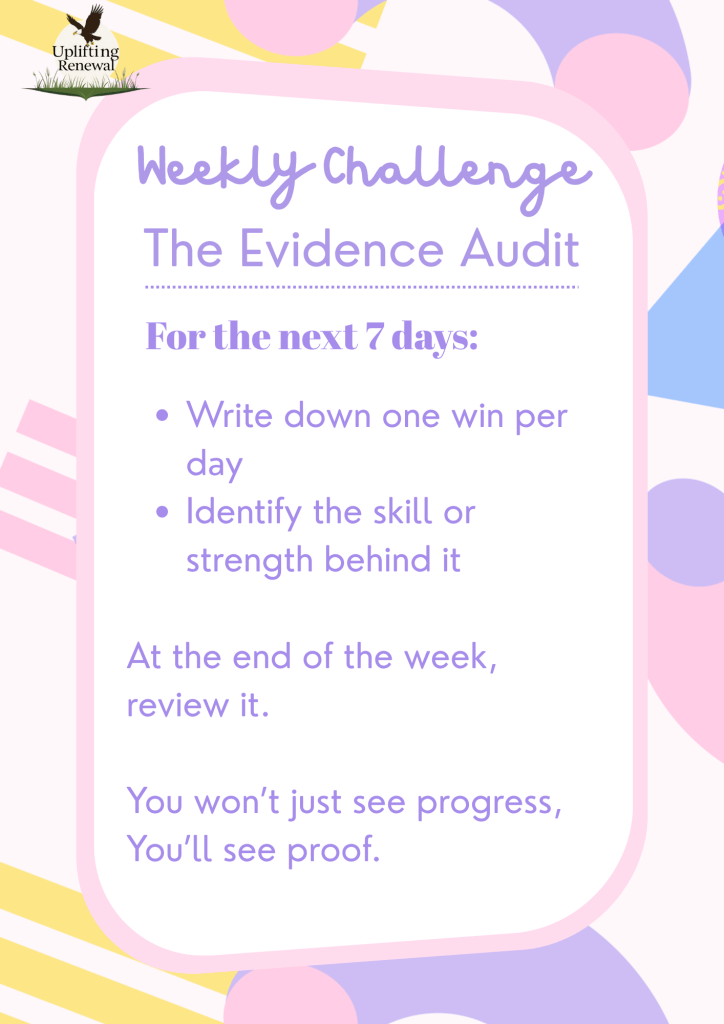
- Keep an “Evidence Log” (wins + the skill behind them)
- When you succeed, ask: What did I do well here?
- Replace “I got lucky” with “I was prepared”
Luck may open doors but you still had to walk through them.
5. The reluctant leader
“I don’t fit the leadership mould.”
The trap
You think leadership looks one way; loud, dominant, visible.
So you:
- Shrink back
- Question why you were chosen
- Undervalue your influence
The shift
Lead from who you are not who you think you should be.
Leadership is not about personality. It’s about responsibility.
Practical reset:
- Identify your natural leadership style (listener, strategist, encourager)
- Focus on contribution, not performance
- Ask: How can I serve this space well?
You were not placed there by accident.
“The internal monitor of ‘am I good enough?’ is always there. But you have to learn to acknowledge it and then move past it.” -Michelle Obama
A scriptural perspective: Identity over performance
Imposter syndrome tells you: “Prove yourself.”
Scripture reminds you: “You are already chosen.”
When Moses doubted his ability, God didn’t fix his skill. He reframed his identity:
“I will help you speak…” (Exodus 4:10–12)
When you feel unqualified, remember:
- You are created with purpose (Ephesians 2:10)
- You are empowered, not timid (2 Timothy 1:7)
- You are strengthened beyond your own capacity (Philippians 4:13)
You don’t have to be enough on your own.
You just have to be available.
The practical toolkit: How to respond in real time
When the “imposter” voice shows up, because it will, here’s how to handle it:
1. Name it
“This is imposter syndrome not truth.”
2. Challenge it
Ask: What actual evidence supports this thought?
3. Capture your wins
Keep a visible record of what you’ve done well.
4. Stay connected
Don’t isolate. Growth happens in community.
5. Practice self-compassion
You are learning not performing for approval.
The daily “truth audit”
Build this into your routine:
- Label the feeling: “This is doubt, not identity.”
- Fact-check the thought: “What proves I’m capable?”
- Accept the compliment: Say “thank you” and stop there
- Log the win: One thing you did well today
Consistency builds confidence.
The final word
Imposter syndrome doesn’t disappear when you become more successful. It quiets when you become more grounded in truth.
You are not a fraud.
You are not behind.
You are not here by accident.
You are growing. You are learning. You are becoming.
And every time you choose action over doubt, you reinforce that truth.
Keep going.





 Uplifting Renewal
Leave a comment