

“Most people do not listen with the intent to understand; they listen with the intent to reply.” — Stephen Covey
In a world that moves quickly and demands constant responses, listening has become a rare skill.
Many conversations today follow a familiar pattern: while someone is speaking, the other person is already preparing their reply. We nod, we hear the words, but we rarely pause long enough to truly understand the meaning behind them.
Yet listening and hearing are not the same thing.
Hearing is automatic.
Listening is intentional.
Deep listening, the kind that seeks to understand thoughts, emotions, and perspective, is one of the most powerful skills we can develop. It strengthens relationships, improves decision-making, and creates deeper connections in every area of life.
It’s time to rediscover the art of truly listening.
Why listening matters
When we listen well, the benefits ripple through every part of our lives.
- Stronger relationships: When people feel heard, they feel valued. Listening communicates respect, empathy, and care. It builds trust and strengthens emotional bonds in friendships, families, and partnerships.
- Better decision-making: Understanding the full context of a situation leads to wiser choices. Listening helps us gather perspectives and insights we may otherwise miss.
- Greater emotional intelligence: Listening helps us understand the “why” behind people’s behaviour. This awareness builds empathy and helps us respond thoughtfully rather than react impulsively.
- Healthier conflict resolution: Many arguments grow from simple misunderstandings. Listening clarifies intentions and emotions before disagreements escalate into deeper conflict
The hidden cost of not listening
When listening disappears, misunderstandings take its place. The consequences can quietly affect many areas of life.
- Damaged trust: When people feel ignored or dismissed, emotional distance begins to grow. Over time, relationships weaken.
- Workplace inefficiency: In professional environments, poor listening often leads to errors, repeated work, and missed expectations simply because the original request was misunderstood.
- Increased stress: Constant miscommunication creates frustration, tension, and unnecessary conflict.
- Poor decisions: Without truly understanding facts, emotions, or perspectives, decisions are often made with incomplete information.
- Limited personal growth: When we stop listening, we also stop learning. New ideas, insights, and wisdom are easily missed.
Simply put:
Less listening leads to more assumptions and assumptions often lead to mistakes.
How listening shapes our roles in life
Listening affects how we show up in every relationship we hold.
- As a spouse – connection or disconnection: In marriage listening is emotional glue. Without it, couples may begin sharing logistics instead of life. Over time, conversations shrink and loneliness grows.
- As a leader – clarity or isolation: Leaders who fail to listen lose valuable insights from the people closest to the work. When employees feel unheard, ideas disappear and risks go unspoken. Leadership requires listening to reality, not just authority.
- As a parent – influence or distance: Children often interpret listening as love. When they feel dismissed, they may stop sharing their thoughts and emotions, building a wall of silence that becomes difficult to break later.
- As a new employee – learning or struggle: In a new role, listening is essential. Paying attention to instructions, workplace culture, and team dynamics helps build credibility and confidence.
- As a student – depth or surface knowledge: Listening allows students to understand not just what is taught, but why it matters.
- As a neighbour – connection or isolation: Communities are built on small conversations and mutual awareness. Listening helps us understand the environment and people around us.
Practical ways to become a better listener
Listening is a skill that can be strengthened with intentional practice.
- Be fully present: Remove distractions when someone is speaking. Put down the phone, close the laptop, and focus your attention on the conversation.
- Listen without judgment: Resist the urge to interrupt or mentally prepare a rebuttal. Give the speaker space to finish their thoughts.
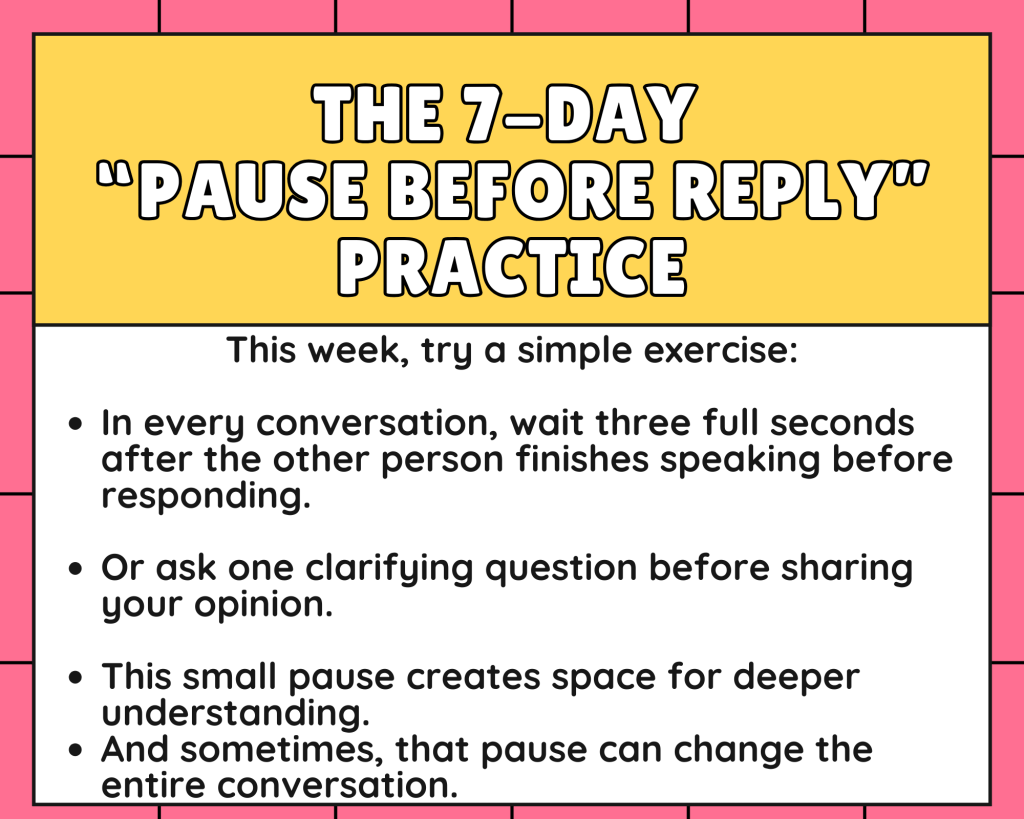
- Ask clarifying questions: Questions such as “Can you explain what you meant by that?” or “Could you give an example?” show genuine interest and help prevent misunderstandings.
- Reflect and summarise: Repeat key points in your own words: “So what you’re saying is…?” This confirms understanding and shows the speaker they are being heard.
- Pay attention to body language: Tone, facial expressions, and posture often communicate more than words.
- Practice empathy: Try to see the situation through the speaker’s perspective. What emotions might they be experiencing?
A scriptural perspective
Listening is not only a communication skill, it is also a spiritual discipline.
Scripture frequently connects wisdom with a humble and attentive ear.
One of the clearest instructions appears in Epistle of James:
“Everyone should be quick to listen, slow to speak and slow to become angry.” — James 1:19
The book of Proverbs also offers a powerful warning:
“To answer before listening — that is folly and shame.” — Proverbs 18:13
When Solomon asked God for wisdom, he specifically requested a listening heart (1 Kings 3:9). He understood that wise leadership begins with the ability to hear and understand others.
Listening requires humility, patience, and compassion qualities that shape both spiritual maturity and healthy relationships.
The gift of being heard
Listening is one of the greatest gifts we can give another person.
When someone feels truly heard, something powerful happens: walls lower, trust grows, and connection deepens.
But the blessing is mutual.
Listening not only enriches the life of the speaker, it enriches the life of the listener as well. It expands our understanding, strengthens our relationships, and brings greater peace into our daily interactions.
In a noisy world, choosing to listen is a quiet act of transformation.
Don’t just hear.
Understand.
The world needs more listeners.





 Uplifting Renewal
Leave a comment