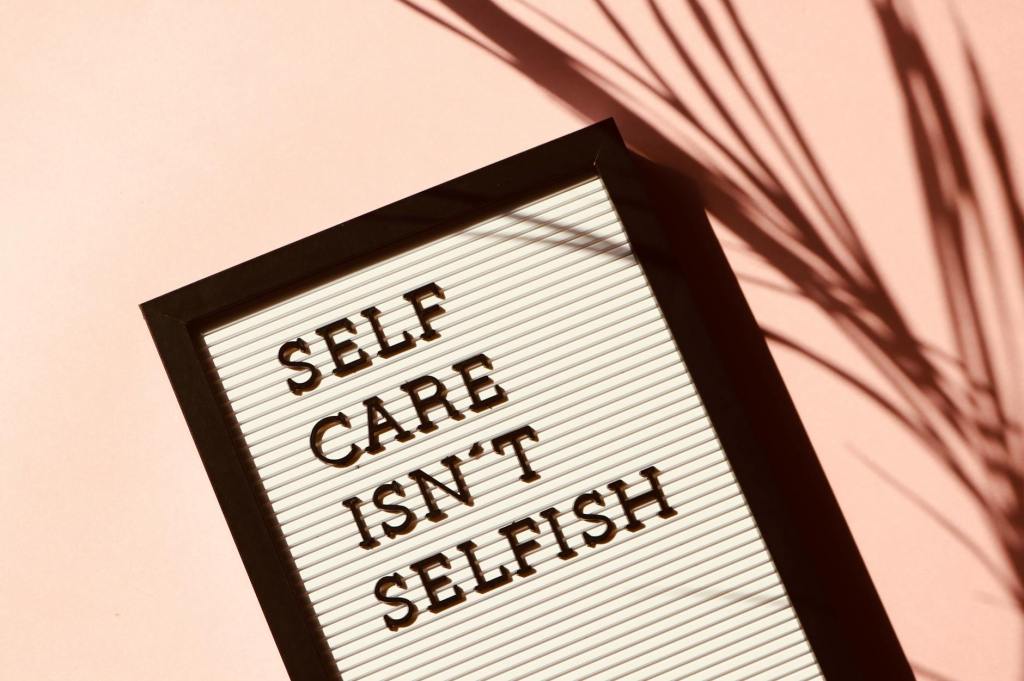
“Self-care is how you take your power back.” – Lalah Delia
Self-care is not a luxury, reward, or act of indulgence. It is a non-negotiable life strategy. It’s the foundation on which resilience, emotional stability, and long-term success are built.
When you care for your mind, body, and relationships, you increase your capacity. You can pursue your purpose more effectively. You stay present and appreciate yourself and those around you.
Prioritise your physical well-being
Your physical health is the fuel for your mental and emotional resilience.
- Protect your rest: Sleep is the cornerstone of performance. A well-rested mind makes better decisions, manages stress more effectively, and thinks more clearly. Guard your sleep as if it were an important appointment. Anxiety tricks you into thinking you’re making progress, but worry without rest is motion without movement.
- Keep your body active: Consistent movement of any kind is one of the most powerful tools against stress. If gym visits feel overwhelming, skip them. The internet is full of free, effective videos. What matters is regular, simple movement, not perfection.
- Fuel your system: What you eat and drink affects your clarity, mood, and stamina. Choose meals that nourish you, limit sugar, stay hydrated, and prioritise foods that fit your lifestyle and budget. Prevention of fatigue, fogginess, and emotional imbalance begins with what you consume.
Build a strong support network
The people around you influence your energy, confidence, and outlook.
Replace draining relationships with supportive ones. People who uplift your goals and give you space to be honest about your struggles.
A healthy support system strengthens emotional resilience and brings fresh perspective.
Sustained effort versus non-stop effort
Many people burn out because they confuse consistent effort with constant effort.
- Sustained effort: This is the marathon approach that relies on deliberate pacing, consistency, and regular rest. It leads to long-term growth and avoids burnout. You work steadily, not frantically.
- Non-stop effort: This is the sprint approach which is constant exertion without rest. It produces quick results, but is unsustainable, increasing errors, exhaustion, and emotional collapse.
Choose the marathon. Schedule breaks. Protect your pace. Long-term resilience comes from small, daily practices. These manageable actions protect your energy, sharpen your focus, and strengthen your mental foundation.
Consistency, not intensity is what keeps you moving steadily toward your goals.
Be kind to yourself
Treat yourself the way you would treat someone you care about, with encouragement, patience, and grace.
Self-compassion isn’t weakness; it is emotional intelligence in action.
Protect your energy
Healthy boundaries preserve your mental capacity. Learn to say no without guilt. When a request threatens your focus or rest, decline politely and suggest an alternative time or solution. This protects your emotional bandwidth.
Remember to combat perfectionism. Perfectionism is a silent driver of burnout. Adopt the mantra: “Done is better than perfect.”
A “good enough” 10-minute walk beats waiting for the perfect 60-minute workout.
Relational & mental self-care
Small mental habits create long-term stability.
- Micro-gratitude mapping: At the end of each day, list three small things you’re grateful for. This rewires your mind to notice wins, not just problems.
- Scheduled disconnection: Set aside at least 15 minutes daily. Phone on airplane mode, step away from work and engage in a low-effort, non-productive activity. This mental break is essential for emotional recovery.
The integrated resilience system
[Self-Care = Fuel], [Mindset = Shift], [Strategy = Action]
This system combines three areas that work together to build sustained resilience:
- Self-care (the fuel): Your actionable technique requires adding your sleep boundary to a healthy movement anchor. Protect your sleep with strict wind-down rules. Also incorporate one small, daily non-negotiable movement habit. A rested, energized body supports a resilient mind.
- Mindset (the shift): Start now with a “not yet” technique. Transform self-talk from, “I can’t do this” to “I can’t do this yet.” “Yet” keeps the future open and reinforces resilience.
- Cognitive strategy (the action): Apply the two-minute rule. If a task takes less than 2 minutes, do it immediately. Use it as a gateway habit. Read one page. Put on your running shoes. Draft a quick email, etc. Small beginnings dissolve resistance and build momentum.
Scriptural perspective
Self-care, when grounded in the right heart posture, is a spiritual discipline.
- Your body is God’s temple (1 Corinthians 6:19–20): Caring for your health honors God. Self-care also enables service because you cannot serve well when depleted.
- Love your neighbor as yourself (Matthew 22:39): Healthy self-love makes you more capable of loving others. You are the most constant part of your life. Treat yourself with dignity, respect, and care.
“Self-care doesn’t mean ‘me first.’ It means ‘me too.” – L.R. Knost
Pause
Inhale for 4 seconds
Exhale slowly for 8 seconds
Repeat 5 times
The slow exhale activates your body’s calming system
5-Minute activity breaks
Every 60–90 minutes, do a quick physical reset: stretch, stand move
This reduces tension and restores focus.
Self-care is self-respect. It is the daily decision to prioritize your well-being so you can show up fully—for your purpose, your future, and the people you love.
No one can be a better you than you.
Honour yourself. Guard your energy. And take the time today to invest in the only vessel you will live in for the rest of your life, you.




 Uplifting Renewal
Leave a comment